July brings two key updates to Tigg: Delivery Notes and Goods Receipt Notes for tracking both physical and accounting inventory movements and Favourite Tags in Tigg POS for faster access to frequently sold items and quicker billing. At Tigg, we remain committed to continuously enhancing our platform to help businesses streamline operations, improve accuracy, and work more efficiently.
Let's explore what's new.
Tigg has introduced a new mode of inventory tracking using Delivery Notes and Goods Receipt Notes, providing businesses with a more practical and efficient way to manage stock movement.
Previously, inventory in Tigg was tracked solely through accounting transactions such as Sales Invoices and Purchase Bills. With this enhancement, businesses can now track inventory based on the physical movement of goods in addition to accounting transactions.
This feature enables inventory to be updated based on actual stock movements, ensuring more accurate and real-time visibility of inventory levels.
By separating physical inventory movement from accounting transactions, businesses can:
Inventory reports can now be viewed based on either Physical Movement or Accounting Movement by applying the relevant filters, allowing businesses to analyze inventory from both operational and financial perspectives.

Additionally, an Inventory Variance Report is available to identify differences between physical and accounting inventory movements. This report helps businesses reconcile discrepancies, monitor unrecorded or pending transactions, and ensure that inventory records accurately reflect both the actual stock on hand and the corresponding accounting entries.
The introduction of Delivery Notes and Goods Receipt Notes, along with movement-based reporting and variance analysis, provides businesses with a more realistic and reliable approach to inventory management, enabling them to manage, monitor, and reconcile stock movements more effectively within Tigg.
Pin Favourite Items feature in Tigg POS allows businesses to pin frequently sold or commonly used items for quick and convenient access during sales transactions. This enables users to easily locate important items without having to search through the entire item list, making the billing process faster and more efficient.
By pinning favourite items, cashiers can improve operational efficiency at the point of sale and reduce the time required for item selection. The feature is particularly useful for businesses that manage a large number of products and require quick access to high-demand items during peak business hours.
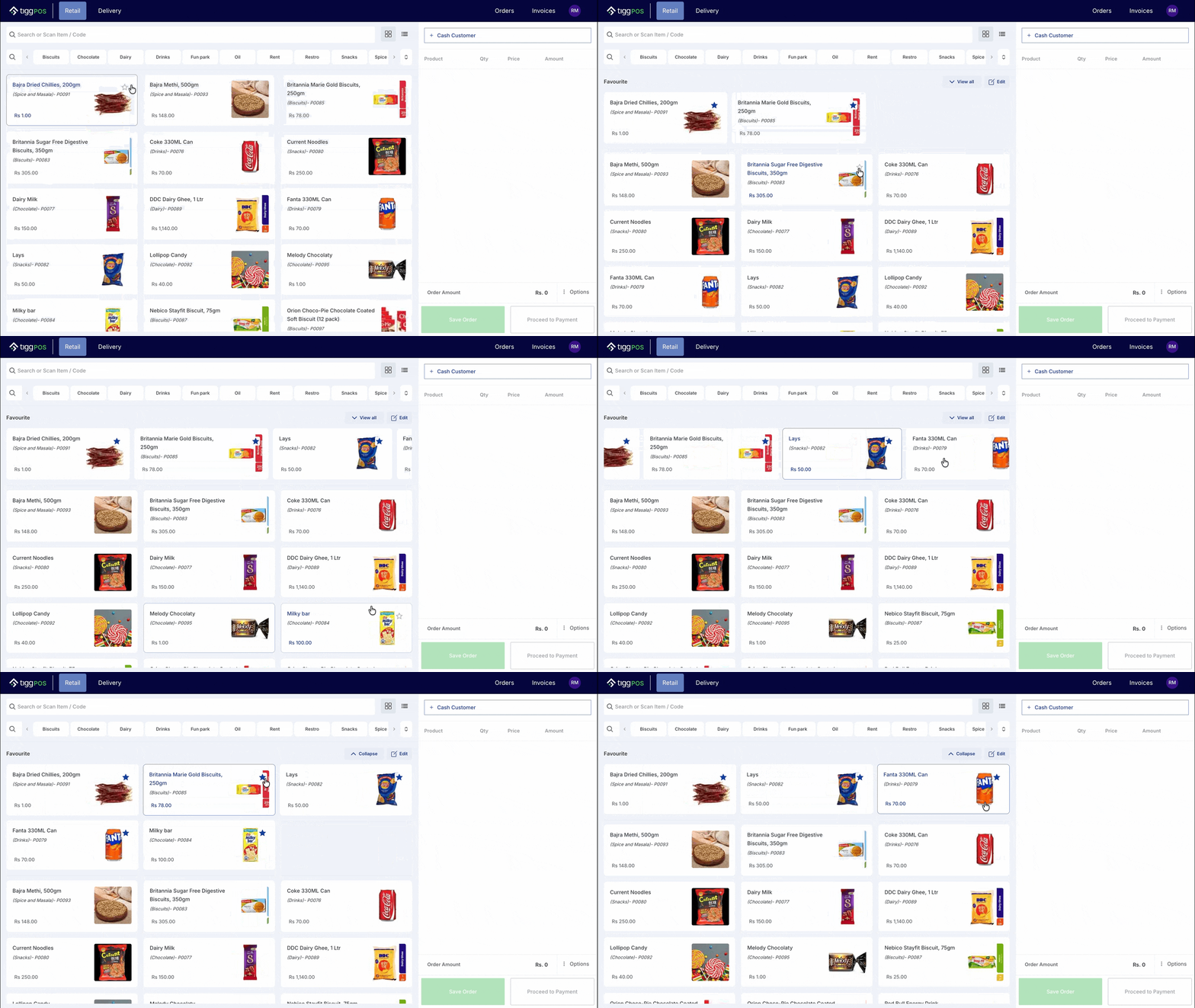
The feature enhances the overall POS experience by simplifying item management and streamlining sales transactions. With pinned favourite items readily accessible, businesses can provide quicker service, minimize delays at checkout, and deliver a smoother and more efficient customer experience.
This update introduces enhancements to Tigg and POS that improve transaction accuracy and streamline order management. The latest improvements are designed to provide better control over financial adjustments and improve operational efficiency.
Key improvements include:
Tigg now validates Credit Notes and Debit Notes against their respective Sales Invoices and Purchase Bills. The system ensures that the quantity and amount entered cannot exceed the original transaction values, helping maintain accurate records and reducing the risk of incorrect adjustments.
The KOT (Kitchen Order Ticket) printing design has been enhanced to provide clearer and more detailed order information. The updated layout now displays the name of the user who entered the KOT, along with the corresponding date and time of entry. This improvement enhances order traceability, improves team coordination, and supports more efficient order management.